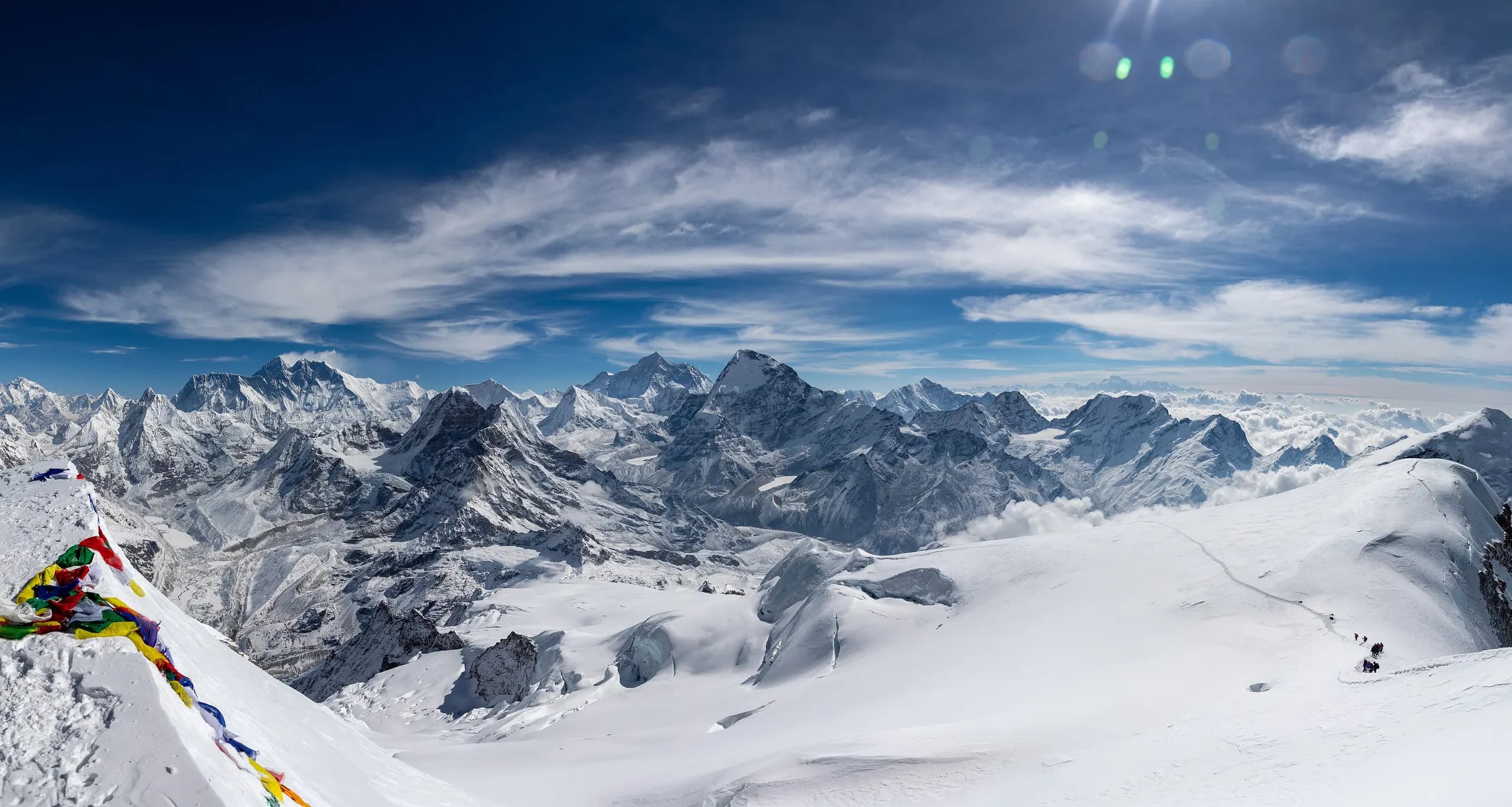
Nepal · Hinku Valley · 6,476 m
Mera Peak Expedition Guide: Route, Difficulty, Cost, Permits & Safety
Planning a Mera Peak Expedition starts with understanding the mountain, not choosing a package too quickly. This guide explains the route, altitude, difficulty, permits, cost factors, safety concerns, gear, best season, and preparation needed before climbing Mera Peak in Nepal.
- Peak
- Mera Peak
- Altitude
- 6,476 m (NMA 6,470)
- Region
- Khumbu · Hinku Valley
- Type
- High-altitude trekking peak
- Seasons
- Spring & autumn
- Duration
- 16–19 days
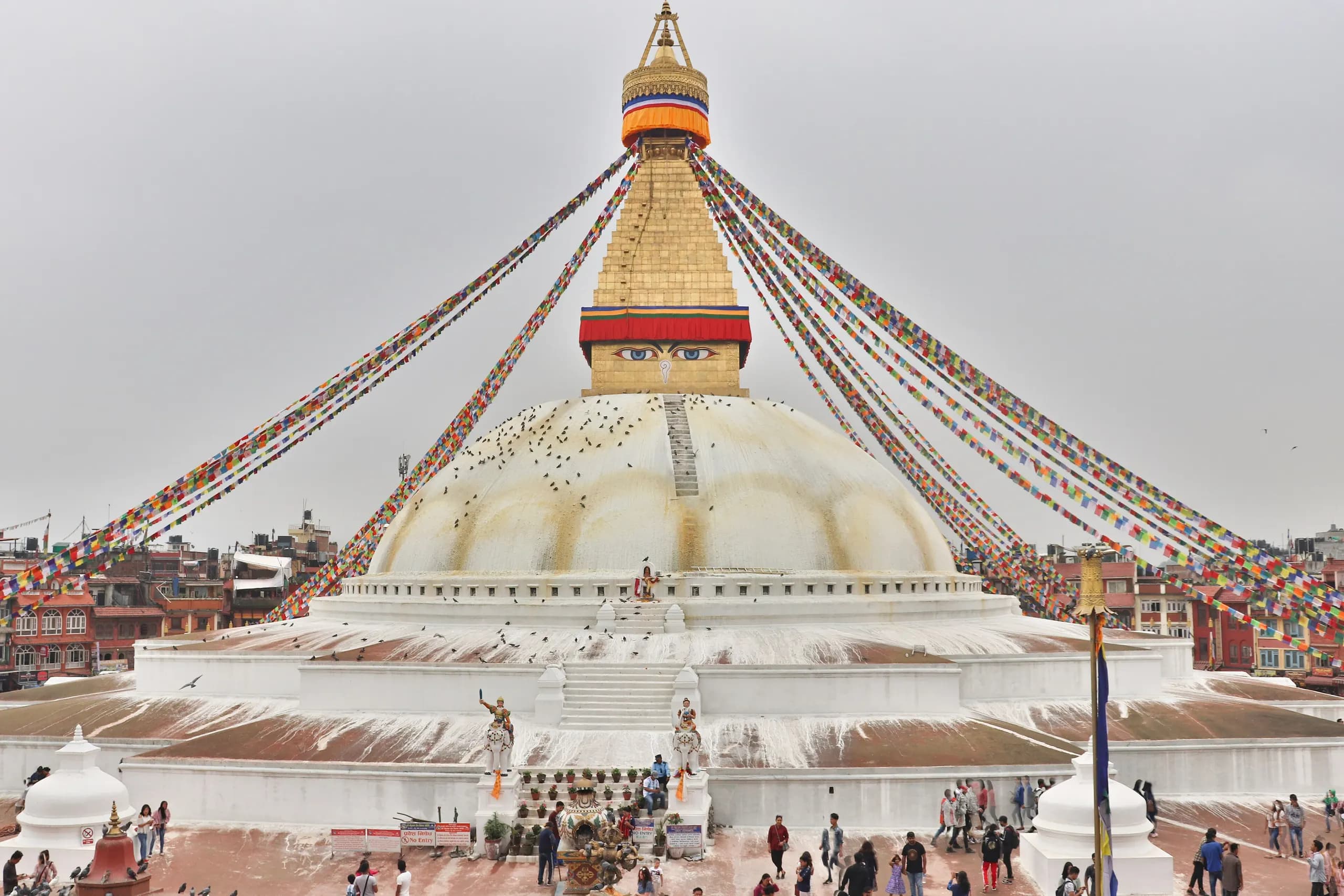
Stage 01 · Kathmandu
Every ascent begins below
Mera Peak is one of Nepal’s best-known trekking peaks — often described as a first Himalayan climbing objective for fit trekkers who want to move beyond normal trekking.
Although it is often called a “non-technical” climbing peak, it should not be treated as an easy trek. The altitude, cold, glacier travel, weather, and long summit day make it a serious high-altitude objective.
Altitude
1,400m
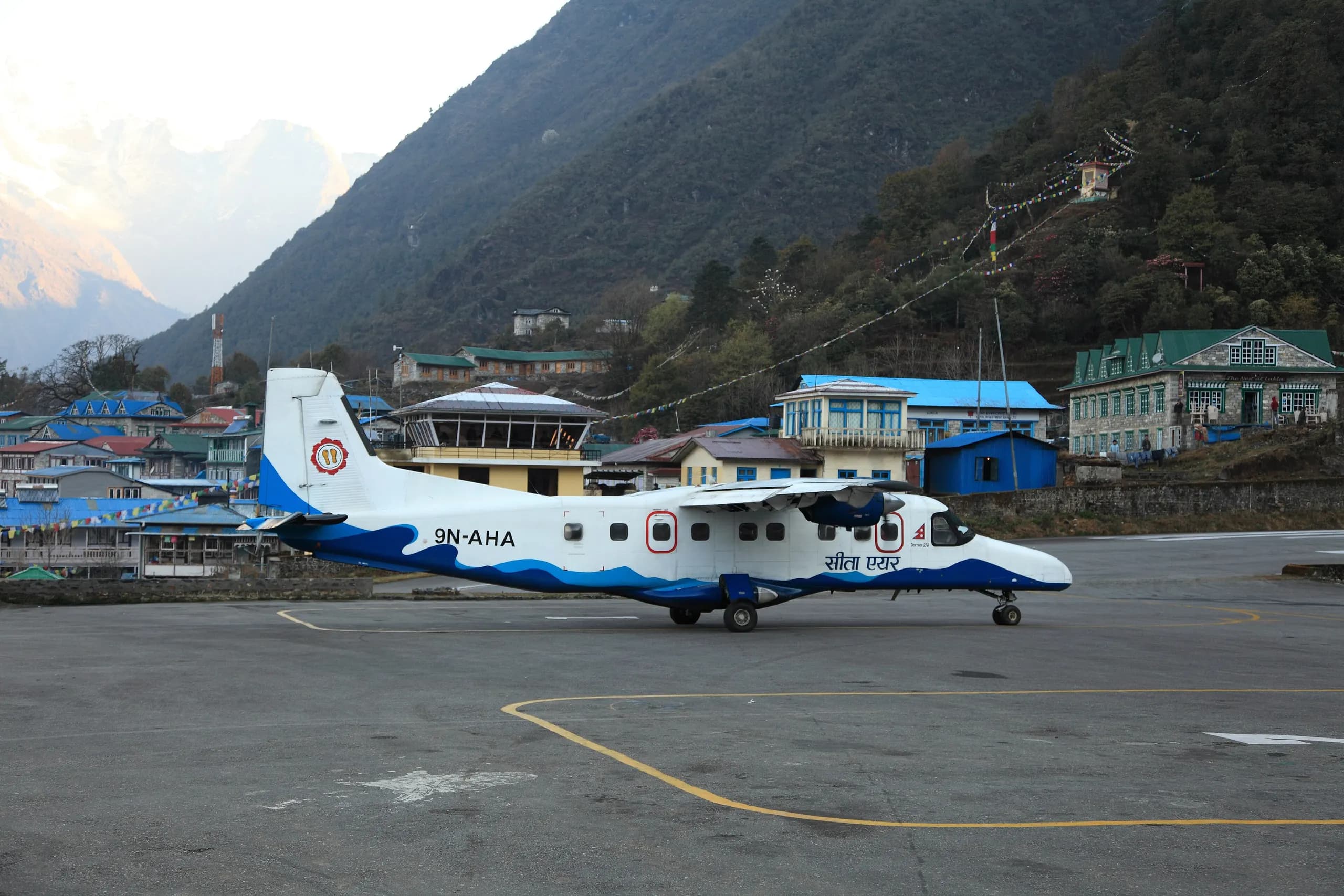
Stage 02 · Flight to Lukla
Forty minutes to the edge of the road map
Most Mera Peak expeditions begin with a mountain flight to Lukla, followed by a trekking approach through the Hinku Valley toward Khare and Mera High Camp.
Weather can delay Lukla flights in either direction — one of the many reasons a good itinerary carries contingency days rather than promises.
Altitude
2,860m
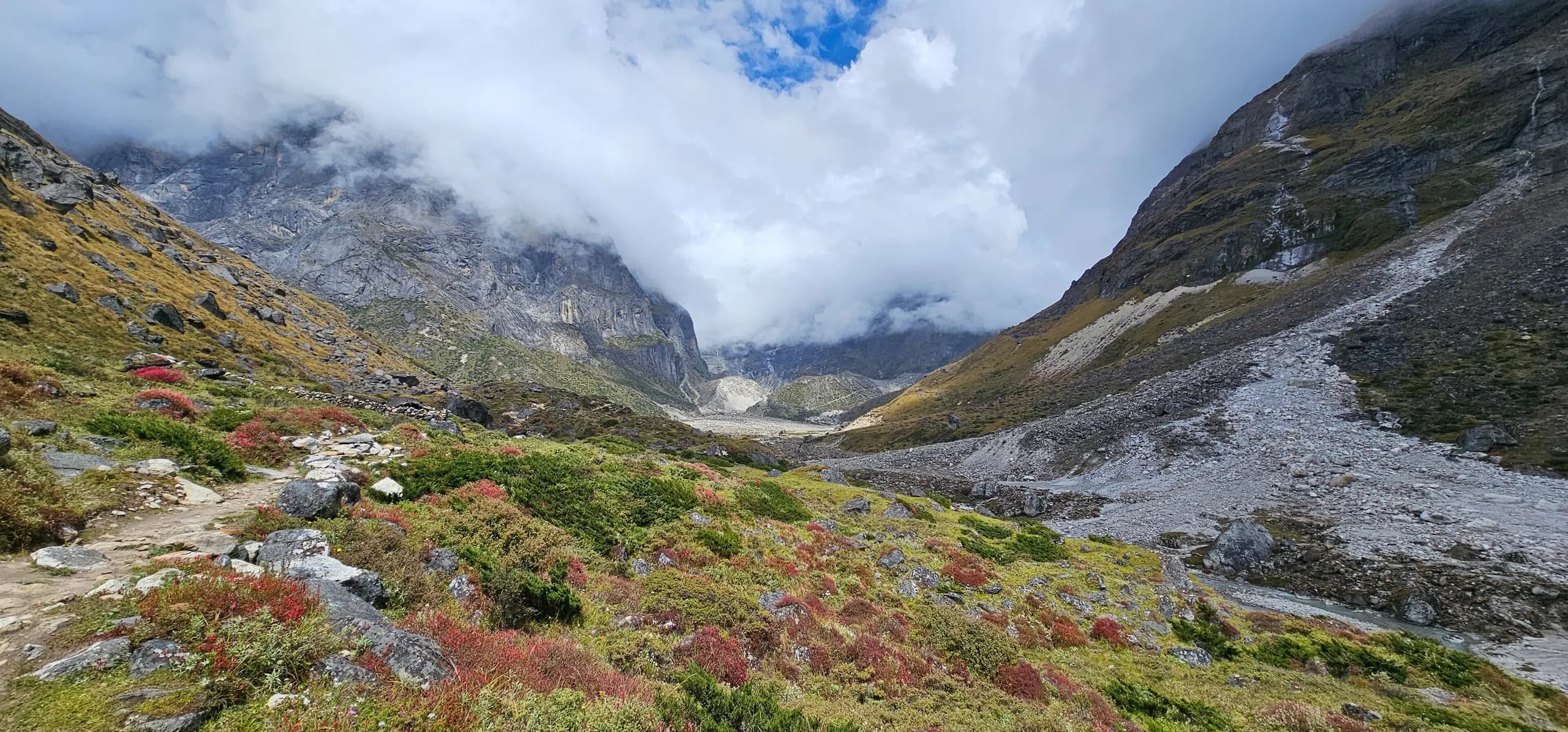
Stage 03 · The Hinku Valley
The remote approach
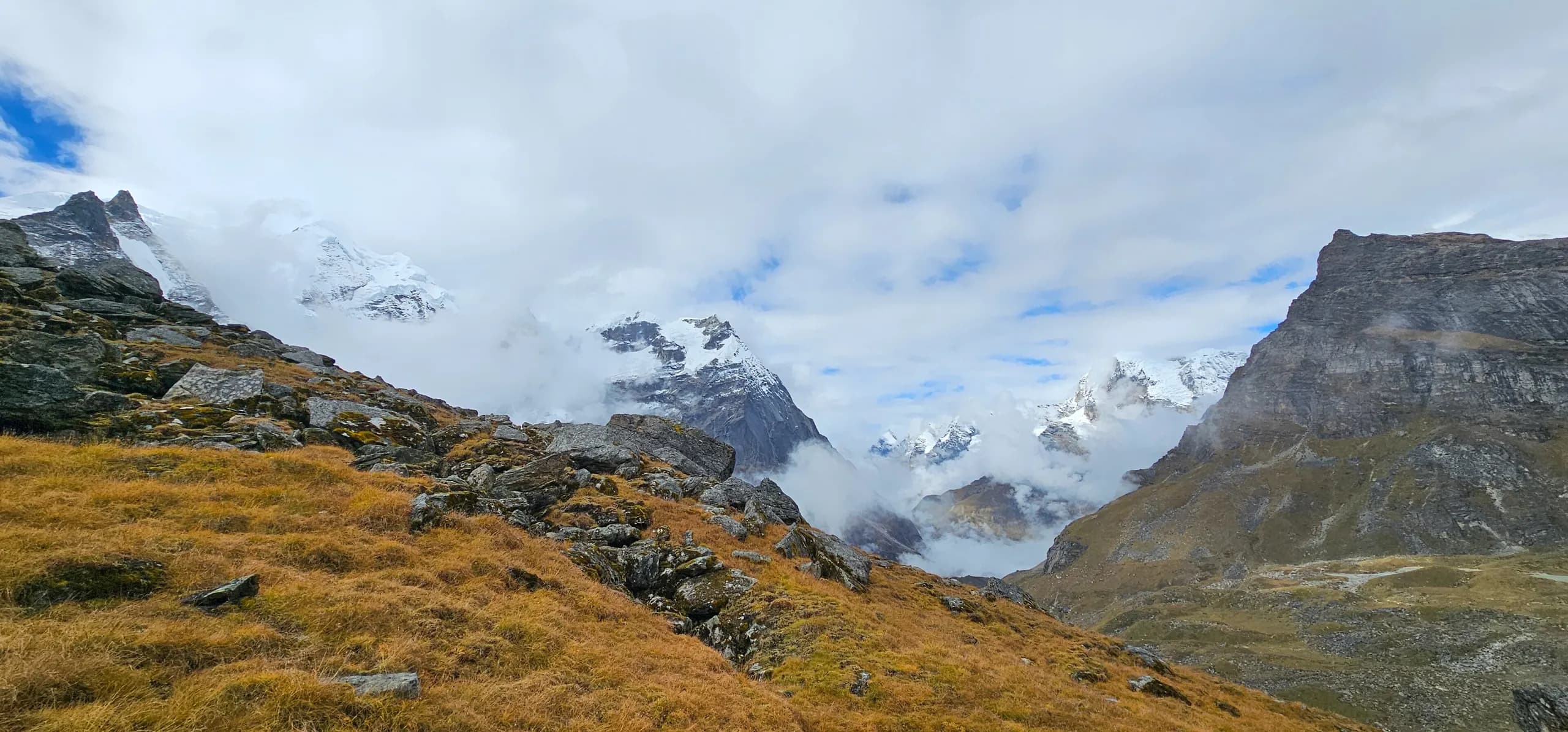
Mera Peak passes through the Hinku Valley, which gives the journey a more remote feel than some busier Everest-region trails. A common route passes through Chutanga, Zatrwa La, Kothe, Thangnak, Khare, High Camp, and the summit route.
The normal route is often described as less technical than the west and south-facing routes — but climbers still need fitness, acclimatization, and basic mountaineering preparation.
Altitude
4,350m
Stage 04 · Khare
Acclimatize. Prepare. Wait for weather.
Most Mera Peak itineraries range from about 16 to 19 days. A good itinerary should not only count days — it should explain why the route includes acclimatization, pre-climb skills practice, summit timing, and contingency days. Mera Peak is high enough that rushing the itinerary can increase risk.
6,476m
Summit altitude
19days
Typical expedition
5×8,000ers
Visible from summit
Altitude
5,045m
Stage 05 · Mera High Camp
Where easy stops being the right word
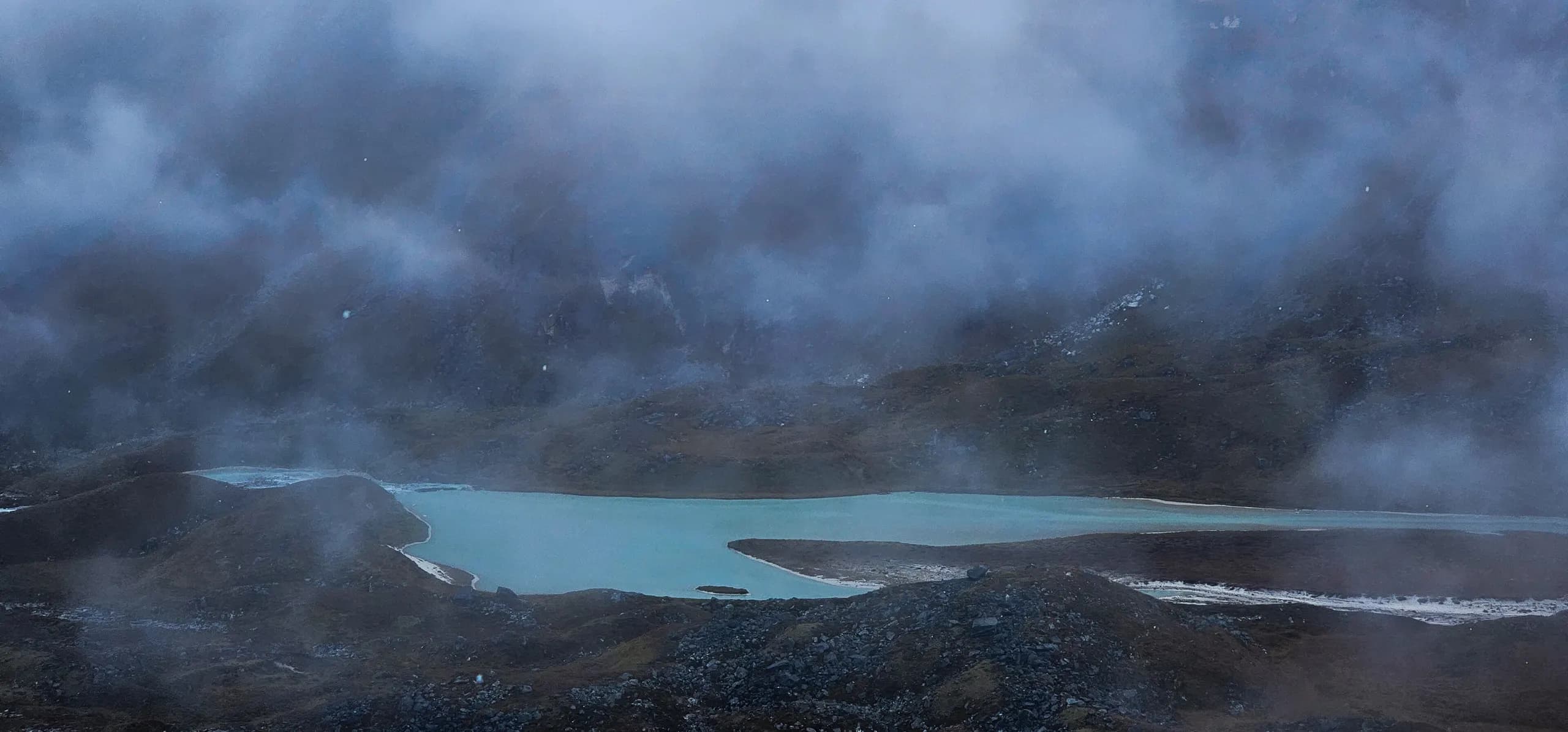
Mera Peak is often described as a suitable first Himalayan climbing peak, but that does not mean it is easy. Climbers face serious altitude, cold, glacier conditions, and a demanding summit day.
- Altitude above 6,000 m
- Long summit day
- Cold pre-dawn starts
- Glacier travel
- Crampons & ice axe
- Accumulated fatigue
- Weather & visibility
- Descent after the top
Altitude
5,780m
Stage 06 · Summit push · 02:00
Headlamps at two in the morning
Summit day starts early, cold, and dark. Mera Peak safety depends on preparation, acclimatization, weather, guide support, equipment — and honest decision-making. The summit date is never fixed; the descent always is.
- Altitude sickness risk
- Gradual acclimatization
- Glacier travel
- Cold exposure
- Weather changes
- Flight delays
- Summit-day fatigue
- Evacuation planning
- Proper travel insurance
01:00
Wake at High Camp
Melt snow, force down breakfast, check layers and crampons from the tent porch.
02:00
Rope up, headlamps on
A slow line of lights moves onto the glacier. Cold governs everything.
05:30
First light on the ridge
The horizon lifts behind Kanchenjunga — the coldest hour comes just before it.
08:30
Summit · 6,476 m
Five 8,000-metre peaks on one horizon. Photos, water, then turn around.
12:00
Back below High Camp
Descent is where fatigue bites hardest. The climb ends at Khare, not at the top.
A typical summit-day rhythm — timings vary by team, season, route conditions, and turnaround decisions.
Stage 07 · Summit · Dawn
6,476 metres
(Nepal Mountaineering Association listing: 6,470 m)
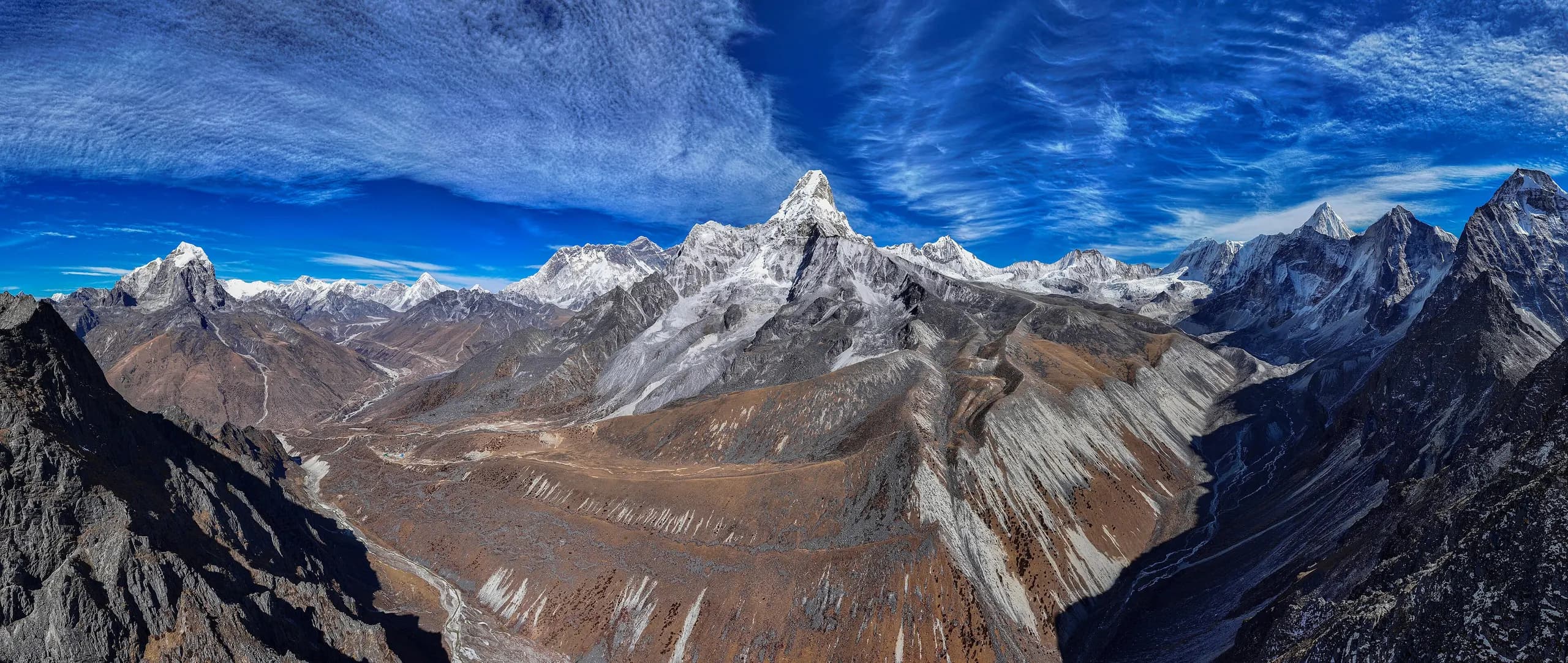
The summit is famous for views of five 8,000-metre mountains: Everest, Lhotse, Makalu, Cho Oyu, and Kanchenjunga — a horizon few first Himalayan objectives can offer.
The descent
The summit is optional. Planning is not.
What follows is the research that should happen before any booking: costs, permits, seasons, comparisons, and the mistakes climbers make before they ever reach Lukla.
Editorial positioning
An Information-First Guide, Not a Booking Page
This website is built for climbers researching Mera Peak before choosing any operator, package, or expedition plan. Our goal is to help you understand the climb, compare information carefully, and ask better questions before making a travel decision.
- 01Whether Mera Peak is suitable for your experience level
- 02How the route normally works
- 03Why acclimatization and contingency days matter
- 04What affects the cost of a Mera Peak expedition
- 05What permits, gear, and safety planning may be required
- 06What questions to ask before choosing an operator
Interlude · The film
The mountain, in motion.
Route lines and cost tables explain the logistics. Thirty seconds above the snowline explains the pull. Watch the range breathe — then keep researching.
[ 6,476 m awaits ]
Drone footage: Himalayan high country · free license via Pixabay
Tip: scroll to dive
Suitability
Why Climbers Choose Mera Peak
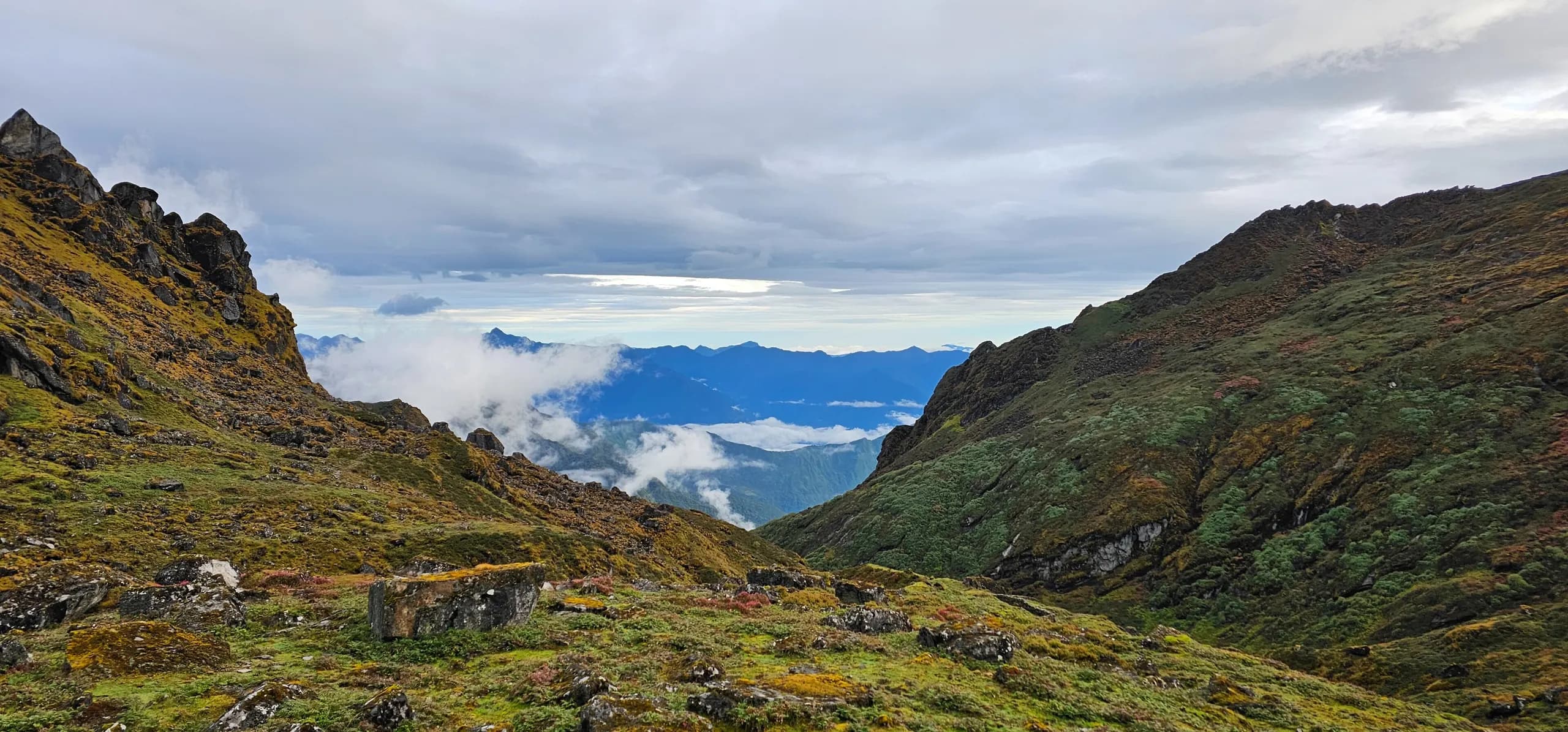
Climbers often choose Mera Peak because it offers a rare mix of high altitude, big Himalayan scenery, and a less technical normal route compared with more demanding climbing peaks. It is frequently used as a stepping stone for trekkers who want to gain Himalayan climbing experience.
Best for
- ✓ Fit trekkers wanting their first Himalayan climbing peak
- ✓ Climbers preparing for bigger objectives
- ✓ Travelers who want a remote valley approach
- ✓ People interested in summit views of major Himalayan peaks
Not ideal for
- ✕ Travelers with very limited time
- ✕ Trekkers who do not want altitude exposure
- ✕ People without proper insurance
- ✕ Anyone expecting a normal trekking-only experience
Money & paperwork
Mera Peak Cost: What Affects the Price?
Costs vary because operators include different levels of service, support, logistics, staff, gear, and contingency planning. A lower price may not always mean better value if important safety, insurance, guide, permit, or support details are missing.
Prices change by season, group size, itinerary, exchange rate, permit rules, route, and operator policy. The NMA lists Mera Peak service charges by season, with spring fees higher than other seasons. Always verify current inclusions before committing.
Permits and Documents
- ▲Mera Peak climbing permit
- ▲National park or conservation entry permits depending on route
- ▲Local municipality permit where applicable
- ▲Nepal visa & passport validity
- ▲Travel insurance
- ▲Operator-arranged documentation
- ▲Emergency contact & evacuation details
Permit rules and fees can change — verify requirements with official sources or a qualified expedition operator before travel.
Timing
Best Time to Climb Mera Peak
The most common climbing seasons are spring and autumn — periods that generally offer more stable mountain conditions than monsoon or deep winter.
Spring
Strong climbing season
Warmer than winter, popular for Himalayan climbs
Autumn
Strong climbing season
Often clearer post-monsoon skies
Monsoon
Usually less ideal
Rain, cloud, trail conditions, and visibility can affect travel
Winter
Possible for some teams
Colder — requires stronger preparation and cold tolerance
Treat seasonal guidance as general planning information, not a weather guarantee.
The route, quantified
Six days of walking, drawn as one line
Explore the full route →Comparison
Mera Peak vs Island Peak: Which One Should You Choose?
| Factor | Mera Peak | Island Peak |
|---|---|---|
| Altitude | Higher — 6,476 m | Lower — 6,165 m |
| Route feel | Remote Hinku Valley | Classic Everest region approach |
| Main challenge | Altitude and endurance | More technical climbing sections |
| Best for | Fit trekkers seeking a first high summit | Climbers wanting technical exposure |
| Summit views | Five 8,000 m peaks | Strong Everest-region views |
Before you book
Common Mistakes — and Climbing Responsibly
Avoid These Mistakes
- 01Assuming Mera Peak is only a trek
- 02Choosing the shortest itinerary without understanding acclimatization
- 03Not checking climbing insurance coverage
- 04Arriving without tested boots or cold-weather gear
- 05Ignoring contingency days
- 06Not training with a pack
- 07Forgetting that weather can change summit plans
- 08Booking without understanding inclusions and exclusions
Responsible Climbing in the Mera Region
The Mera Peak region depends on local communities, guides, porters, and mountain environments that need respect and protection. These are not small details; they are part of responsible climbing.
- ✓ Respect local communities and village life
- ✓ Avoid unnecessary plastic waste
- ✓ Follow leave-no-trace practices
- ✓ Confirm fair porter and staff treatment
- ✓ Choose operators with staff insurance and proper safety systems
- ✓ Follow guide instructions on route, weather, and waste
- ✓ Respect sacred places, local customs, and photography rules
Questions
Mera Peak Expedition FAQs
Is Mera Peak suitable for beginners?+
Mera Peak may be suitable for fit trekkers who have good endurance and are willing to learn basic mountaineering skills. It is not suitable for people who are unprepared for high altitude, cold conditions, or a long summit day.
How difficult is Mera Peak?+
The normal route is often considered less technical than some other Himalayan climbing peaks, but the altitude, glacier travel, weather, and summit day make it physically demanding.
How many days do you need for Mera Peak?+
Most Mera Peak itineraries take about 16–19 days, depending on route, acclimatization, weather contingency, and arrival/departure planning.
What is the best season to climb Mera Peak?+
Spring and autumn are the most commonly recommended seasons. Weather can still change quickly in the mountains, so climbers should allow flexibility.
Do you need previous climbing experience?+
Previous climbing experience is helpful but not always required for the normal route if climbers have strong fitness and receive proper basic training. However, experience with altitude and trekking is strongly recommended.
What permits are required for Mera Peak?+
A Mera Peak climbing permit is required, and additional national park, conservation, or local permits may apply depending on the route. Always verify current requirements before travel.
Is Mera Peak harder than Island Peak?+
Mera Peak is higher, while Island Peak is often considered more technical in some climbing sections. The better choice depends on your fitness, experience, and climbing goals.
Do you need travel insurance for Mera Peak?+
Yes. Climbers should have travel insurance that clearly covers trekking peak climbing, high altitude, emergency evacuation, and the specific activity planned.
Soft contact
Still Researching Mera Peak?
If you are comparing routes, difficulty, permits, gear, safety, or timing, send a question. We will point you toward the right information so you can research more confidently before choosing an expedition plan.
Ask a Mera Peak QuestionSome resources may link to travel-planning partners where travelers can compare expedition options or request tailored offers from verified agencies. This website remains an informational resource first.